

Logistics
Date & Time: Wednesday, May 6, 2026 | 3:00 PM CET / 9:00 AM ET
Online Platform: Zoom (will be livestreamed on GDC YouTube channel)
Co-hosting Organizations: European Democracy Youth Detwork (EDYN), Global Democracy Coalition
Livestream Details: Coming Soon!
Background
Across Europe, artificial intelligence is rapidly reshaping the conditions under which democracy operates. From electoral processes and public discourse to information ecosystems and civic participation, AI is introducing both new opportunities and profound risks.
While Europe has positioned itself as a global leader in regulating digital technologies, important questions remain about the gap between regulatory ambition and practical implementation. At the same time, AI-driven disinformation, synthetic media, and algorithmic amplification are evolving faster than institutional responses, often operating across borders and beyond the reach of traditional governance frameworks.
Rather than focusing on solutions, this webinar creates space to reflect on the unresolved tensions and open questions that are emerging at the intersection of AI and democracy in Europe. It invites perspectives from across sectors, civil society, public institutions, tech, and research, to better understand where current approaches may be falling short, where new risks are emerging, and what questions require deeper exploration.
The discussion will serve as an entry point to the 2026 GDC Europe Regional Forum, helping to surface key dilemmas that will be further explored in Prague.
Objectives
- Explore how AI is reshaping democratic processes, particularly in relation to elections, public discourse, and information ecosystems
- Identify key tensions between regulatory ambition, technological development, and institutional capacity
- Examine the cross-border nature of AI-driven risks and their implications for governance
- Surface critical gaps, uncertainties, and unresolved questions in current approaches
- Generate insights to inform discussions at the Europe Regional Forum on democratic resilience and electoral integrity
Speakers / Experts Profiles
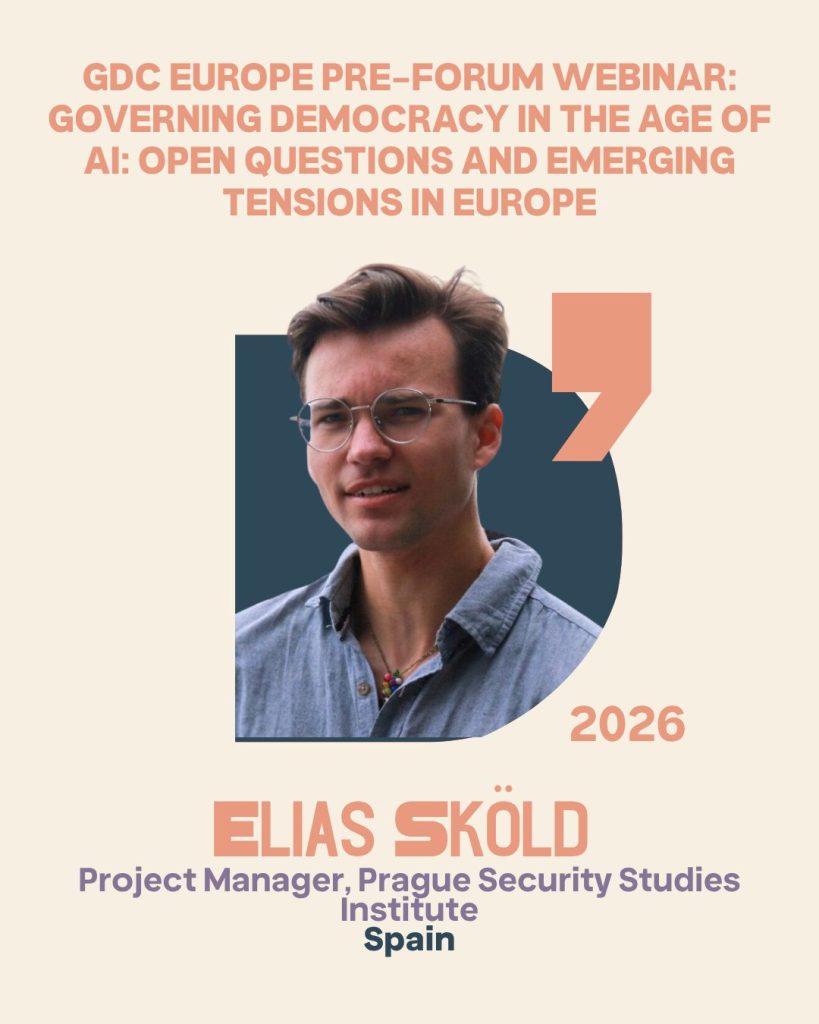
MODERATOR: Elias Sköld
Project Manager, Prague Security Studies Institute
Elias Sköld is a Project Manager for the Economic and Financial Statecraft Program, focusing on China. He holds a Master’s Degree in Security, Intelligence, and Strategic Studies, as well as a Bachelor’s Degree in Chinese Studies, having written his thesis on how recent breakthroughs in Artificial Intelligence influenced the Chinese government’s policy practices. Elias‘ research interests focus on high level political decision-making, disruptive technologies, and climate change and its geopolitical consequences.
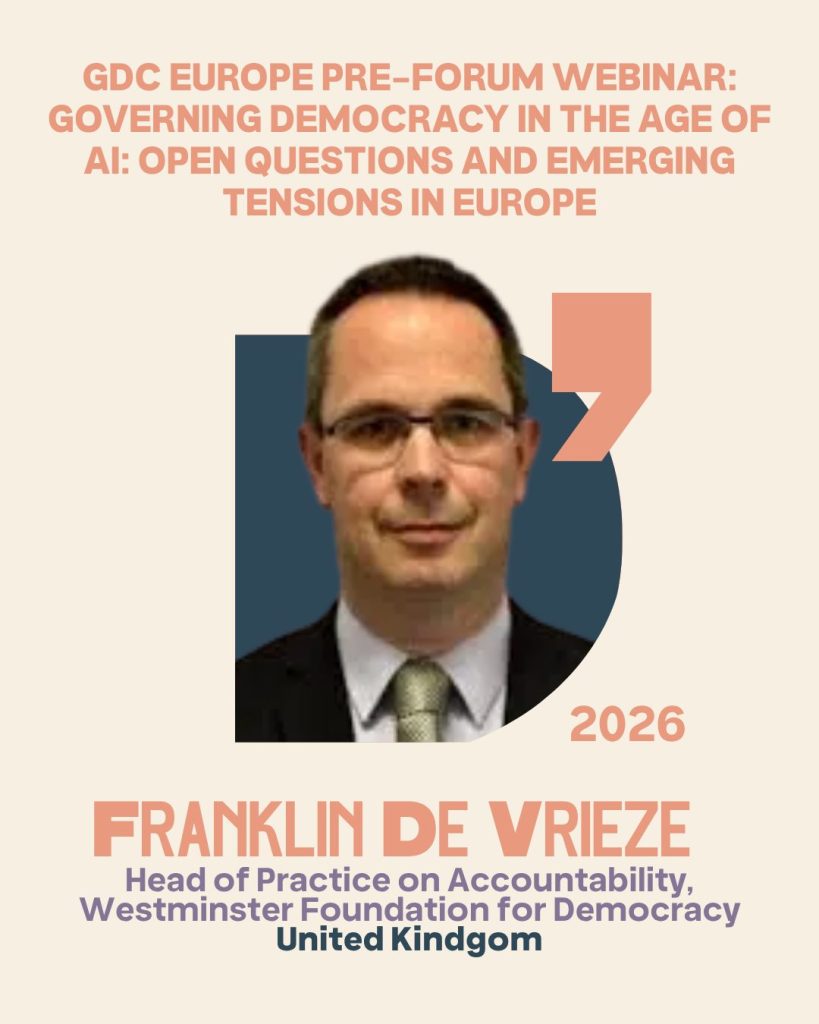
Franklin De Vrieze
Head of Practice (Accountability), Westminster Foundation for Democracy (WFD)
Franklin is a democracy and governance expert with extensive experience in post conflict, fragile and transition countries. His areas of expertise are parliamentary strengthening, legislative impact analysis and scrutiny, institution building for anti-corruption and integrity, policy making on combatting illegal finance, and the oversight role of parliaments on public finances and public debt.
Franklin is WFD’s in-house expert on Post-Legislative Scrutiny, independent oversight institutions, financial accountability, and anti-corruption. He develops tools, resources and research to support the design and implementation of WFD programmes. He offers technical assistance, programme quality assurance and parliamentary advice to WFD country teams.
Franklin has over 30 years’ experience in the field of good governance, with a specific 20 years focus on parliamentary strengthening. He has led many parliamentary identification, formulation and evaluation missions. His previous positions included Programme Manager of UNDP’s Global Programme on Parliamentary Strengthening and Team Leader of the Central Governance Unit at the OSCE Mission in Kosovo. He has worked for European Union Delegations, Swiss Development Cooperation (SDC), National Democratic Institute (NDI), Inter-Parliamentary Union (IPU), and other organizations and institutions. He played a leading role in the Belgian chapter of the International Campaign to Ban Landmines (ICBL).
Franklin is a published researcher and the author of several academic and policy publications.
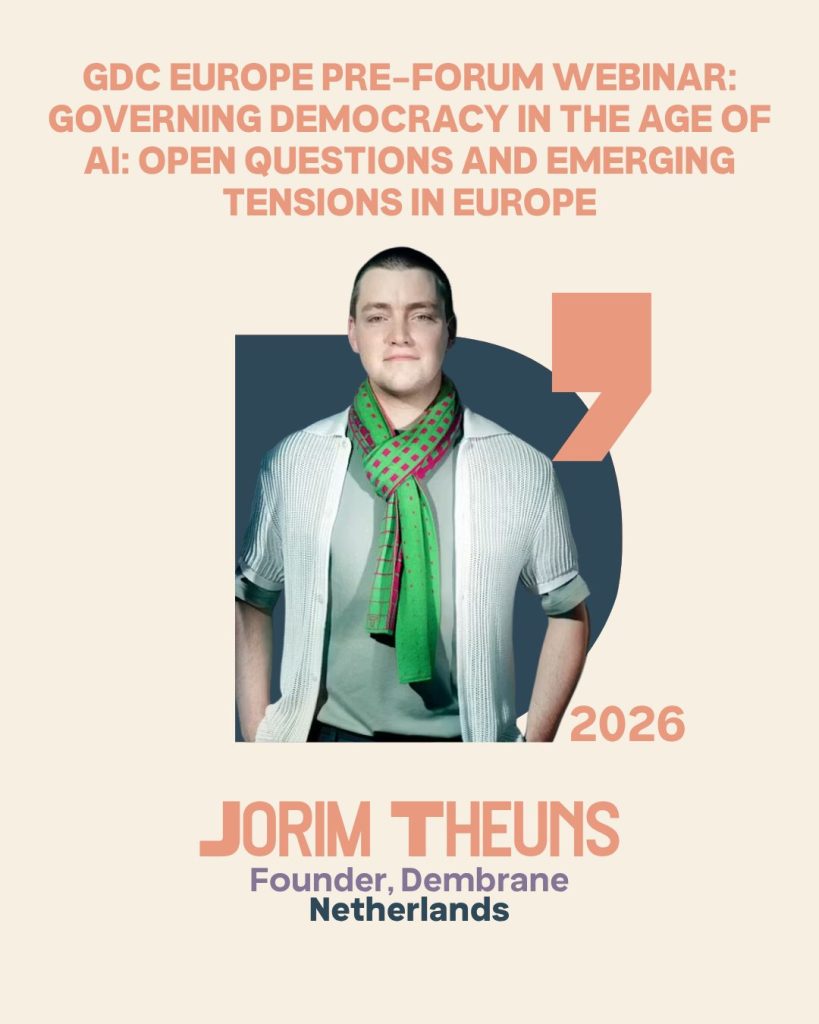
Jorim Theuns
CEO and Co-founder, Dembrane
Jorim Theuns is the CEO and co-founder of Dembrane, a civic tech initiative dedicated to transforming how democratic participation works in everyday life. At the heart of Dembrane’s work is the belief that democracy should be more than a political event every few years, it should be part of how we govern our cities, design public services, and make collective decisions.
With experience spanning public innovation, deliberative processes, and open-source technology, Jorim and his team have helped governments and communities across Europe engage citizens more meaningfully, whether through multilingual citizen assemblies, participatory climate planning, or real-time tools for dialogue. Under his leadership, Dembrane is redefining how democratic infrastructure can be built to serve people better, day by day.
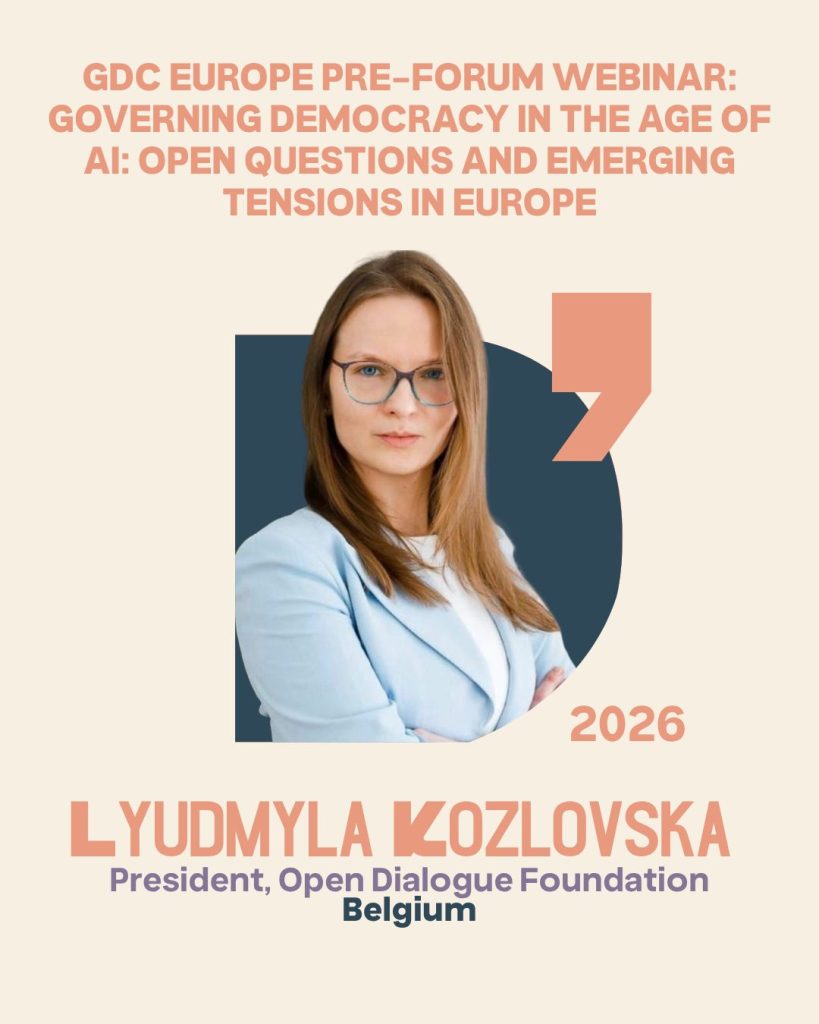
Lyudmyla Kozlovska
President, Open Dialogue Foundation
The Open Dialogue Foundation (ODF) was established on Lyudmyla’s initiative and she has served as its President since June 2010. A human rights defender from Ukraine campaigning for smart sanctions by G7 countries against Russia and its allies. Being the initiator and leader of the Building True Change Coalition (BTC Coalition), Lyudmyla has been advocating regulators to address financial exclusion, political oppression and the delivery of humanitarian aid (promoting the vital role of crypto-assets). Since 2021, she has been leading the campaign to prevent the abuse of anti-money laundering and countering the financing of terrorism (AML/CFT) laws by malign state actors. Previously, Lyudmyla initiated the reform of INTERPOL to fight its misuse as a tool of political prosecution worldwide.
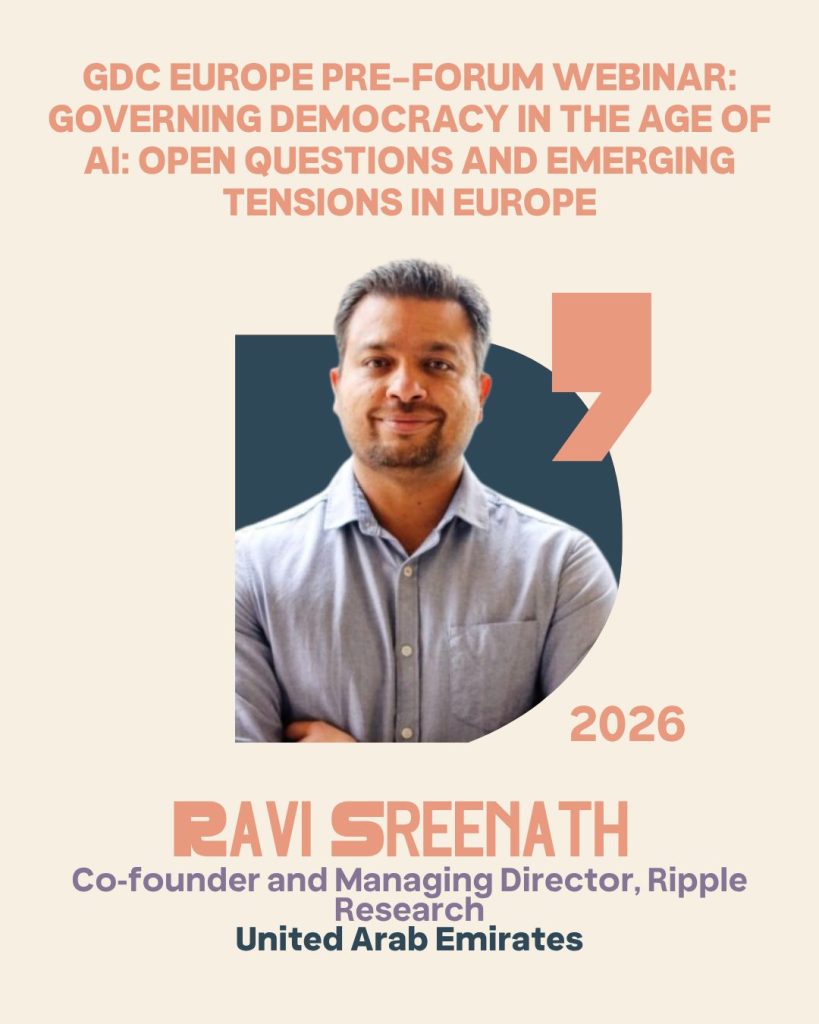
Ravi Sreenath
Cofounder and Managing Director, Ripple Research
Ravi Sreenath is the Cofounder and Managing Director of Ripple Research, a narrative research and strategy firm working with institutions, NGOs, and coalitions on misinformation, climate, democracy, and public health. They help their partners decode the narratives, audiences, and cultural forces shaping public behaviour, and design strategic responses. Partners include the Heinrich Böll Stiftung, WWF, WHO, Changing Markets Foundation, Mercy Corps, the Fletcher School at Tufts University, and the CDC. Their work has been covered by the New York Times, the Washington Post, WIRED, POLITICO, Forbes, and MIT Technology Review. Over the past twenty years, he has worked with organisations ranging from UBS Investment Bank to the World Intellectual Property Organization, and has lived and worked across more than thirty countries in Asia, Europe, and East Africa. He has advised bilateral organisations, government agencies, social enterprises, and technology startups on strategy, research, and impact. He writes and speaks regularly on misinformation, narrative research, artificial intelligence and the information environment, the manosphere and far-right recruitment, climate opposition narratives, and the future of public discourse.