

Background
In January 2025, the United States government launched a far-reaching restructuring of its foreign assistance architecture, closing USAID, consolidating its functions into the State Department, and freezing all foreign aid programming. By March 2025, the review concluded with the termination of 86 percent of USAID awards and 41 percent of State Department awards, amounting to roughly USD 80.5 billion in cancelled funding. The reductions dismantled decades of US investment in humanitarian relief, health, education, agriculture, economic development and, most dramatically, in democracy, human rights, governance and peacebuilding (DRGP).
The speed and scale of these cuts have destabilized thousands of DRGP organizations across more than 120 countries, weakening civil society, silencing independent media, reducing protection for human rights defenders, and creating conditions that embolden authoritarian regimes. As the largest bilateral democracy donor effectively withdrew from global democracy support in a matter of months, other major OECD donors also announced reductions, widening an already severe funding gap. This shift represents a seismic reordering of the global development and democracy landscape with profound consequences for democratic institutions, human rights, and civic space worldwide.
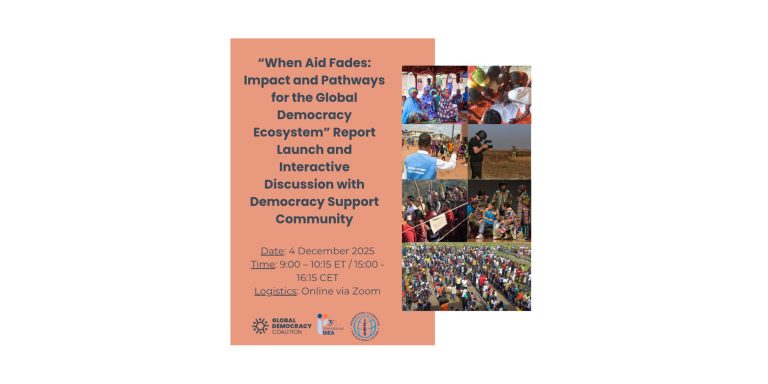
To understand the impact of the US and other foreign aid cuts on the global democracy ecosystem, International IDEA and the International Foundation for Electoral Systems (IFES) under the umbrella of the Global Democracy Coalition undertook a review, based on two surveys of nearly 300 DRGP organizations worldwide, key informant interviews, testimonials and bringing together existing sub-sector studies. This is the most comprehensive report to date on the impact of the foreign aid cuts on the global democracy ecosystem and its broader landscape.
The report finds that nearly 70 percent of all US government–funded DRGP awards—more than 1,600 grants worth over USD 14 billion—have been terminated. Only a small number of governance and human-rights awards remain, most of which are set to end soon, without a clearly articulated continuation strategy. Cuts to other instruments of US soft power, including Voice of America and the United States Institute of Peace, have further compound the deterioration of democratic infrastructure for activists around the world.
Nearly half of surveyed organizations report that US funding made up half or more of their budgets, forcing widespread layoffs, programme suspensions, and, in some cases, closure. In fragile or repressive contexts, these losses directly erode civic and media resilience; in authoritarian settings, the cuts have emboldened governments to intensify repression and adopt restrictive “foreign agent” laws. The global democratic decline magnifies these effects, creating long-term risks for governance, human rights, and public trust. However, the report also shows how organizations across the world are navigating the new funding landscape, what resilience strategies they are using and presents recommendations for the way forward. The report seeks to help inform on-going discussions on the future of foreign aid and how to rethink democracy support in a new geopolitical landscape.
This event will present the report’s key findings and bring forward the voices of organizations directly affected by the cuts, with the aim of facilitating a conversation on the way forward for the democracy support community. Representatives of civil society, independent media, and DRGP-related initiatives will share how they have been impacted and how they are navigating this new reality. The webinar is designed to create an interactive space for democracy, human rights, governance and peacebuilding organizations across regions to exchange experiences, reflect collectively on a reshaped global assistance landscape, and explore how democracy support must be reimagined for the future.
Date: Thursday December 4, 2025
Time: 9:00 – 10:15AM ET / 15:00 – 16:15 CET
Webinar Logistics: Online via Zoom, please fill out the below registration form to recieve the details.
Register here: https://docs.google.com/forms/d/e/1FAIpQLSfas_mei2io-e1qrhyvnj7R8MR1dpWQ9z0EK0NcdubbqfSUEA/viewform?usp=header
Format
75-minute online event with presentations, discussants and an interactive discussions with the audience, including impacted organizations.
Agenda
- 09:00 – Introduction and Moderation of Event
- Elisenda Balleste Buxo, Coordinator, Global Democracy Coalition, International IDEA
- 09:05 – Presentation of report findings by co-authors
- Annika Silva-Leander, Head of North America and Permanent Observer to the UN, International IDEA
- Key overall findings
- Cassandra Emmons, Global Democracy Data Advisor, Center for Applied Research and Learning, IFES
- The way forward and recommendations
- Kourtney Pompi, Consultant
- Impact on electoral assistance sector and the way forward
- Annika Silva-Leander, Head of North America and Permanent Observer to the UN, International IDEA
- 09:25 – Discussants
- Jean Scrimgeour, Co-CEO, Accountability Lab
- Reflections on the key findings of the report, key findings from their survey of the aid sector as a whole, and reflections on implications for the global democracy ecosystem and the way forward, both from the perspective of local partners of Accountability Lab in Asia, Africa and Latin America and of Accountability Lab as a US NGO.
- Additional comments on Civic Partners and what it aims to achieve.
- Rafiu Lawal, Executive Director, Building Blocks for Peace Foundation
- Reflections on the key findings of the report, describe how his organization was impacted by the cuts, how they have navigated the new funding reality and what strategies they have adopted to continue operating.
- What he observes around him in Africa in terms of the impact and reflections on the way forward for civil society organizations in Africa
- Jean Scrimgeour, Co-CEO, Accountability Lab
- 09:45 – Q&A
- Interactive Discussion Questions:
- Looking beyond the budget cuts, how have these shifts reshaped your organization’s strategic priorities, partnerships, or ways of working?
- What additional impacts are you observing as a result of the cuts in your country or region?
- Based on your experience, what adaptive strategies have proven most effective and which ones have not? What would you advise peers who are navigating similar disruptions?
- As a global democracy community, what forms of collaboration, coordination, or solidarity are most urgently needed now, and what needs to fundamentally change in how we operate?
- Interactive Discussion Questions:
- 10:10 – Closing
- Elisenda Balleste Buxo, Coordinator, Global Democracy Coalition, International IDEA
Speaker Bios
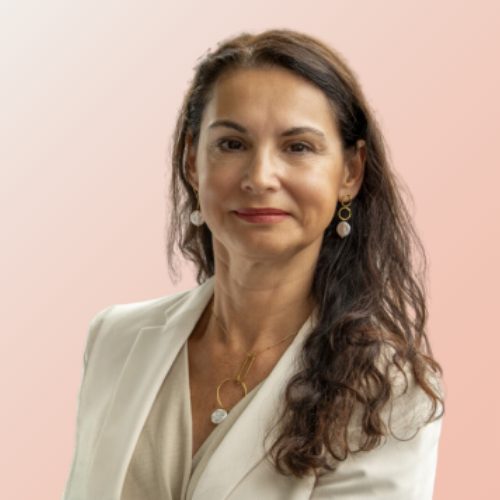
Annika Silva-Leander
Dr. Annika Silva-Leander is Head of North America at International IDEA where she oversees International IDEA’s outreach and partnerships in the region, including relations with US and Canadian stakeholders, civil society organizations, think tanks, and academic institutions, as well as Global Affairs Canada, its engagement with the United Nations, and coordination of the Global Democracy Coalition. She is also International IDEA’s Permanent Observer to the United Nations, representing International IDEA at the UN General Assembly as a leading voice and advocate on democracy. In her UN role, she leads International IDEA’s democracy advocacy and research at the UN, focusing on the nexus between democracy and sustainable development through policy analysis and data production.
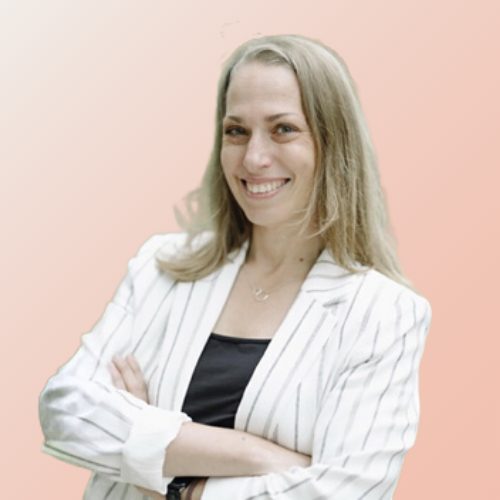
Kourtney Pompi
Kourtney Pompi has over 25 years of international development experience in more than 50 countries, advancing citizen engagement, accountability, and human rights. As founder of KP Global Consulting, she supports locally-driven solutions in partnership with human rights defenders, democracy activists, and civil society. A skilled facilitator and strategist, she builds bridges across communities to strengthen nonviolent collective action and civic participation. Formerly Senior Director at Counterpart International, Kourtney led the Governance Practice Area and has extensive expertise in programming design, management, training, and evaluation in advocacy, civic education, coalition-building, inclusion, and open governance. She has worked with organizations such as Camris International, Creative Associates, Democracy International, the International Migration Organization, the International Republican Institute, the National Democratic Institute, Social Impact, and the U.S. Department of State, demonstrating a lifelong commitment to empowering communities, promoting democratic engagement, and advancing human rights worldwide.

Cassandra Emmons
Dr. Cassandra Emmons is the Global Democracy Data Advisor at the International Foundation for Electoral Systems (IFES) in the Center for Applied Research and Learning. She founded and now leads IFES’ Data Analytics and Visualization Team, through which she is responsible for ensuring evidence-based approaches in all IFES programming, advancing IFES’ data analytics strategy, and managing its public data products such as the Election Guide, the most comprehensive online resource for election dates and deadlines globally. She also leads the strategic thinking and development of IFES’ Democratic Resilience Lab, a hub for innovation and cross-sector collaboration to deter democratic backsliding and counter rising authoritarianism around the globe.
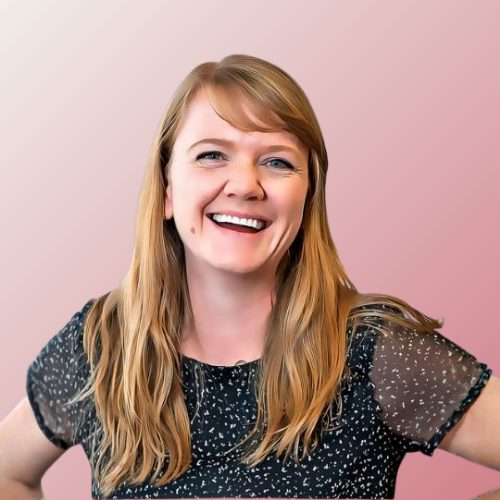
Jean Scrimgeour
Jean Scrimgeour is the Co-CEO and Chief Innovation and Operations Officer of Accountability Lab. Ten years ago Jean was selected to participate in a South African youth peace and conflict program which set her on a path to promote ways to support young people to actively participate in the attainment of good governance in their countries. Although originally South Africa focussed Jean realized, while working in 15 African countries to secure the ratification of the African Charter on Democracy, Elections, and Governance, that governance challenges were essentially universal and that social accountability is key to achieving social and economic liberation. Jean has worked as a public affairs and democratic governance specialist in the United States, the United Kingdom and Southern Africa for Rotary, the UK Foreign Office, the Westminster Foundation and Voluntary Services Overseas. She has a masters degree in conflict resolution in divided societies from Kings College in London as a British Chevening scholar and a bachelor’s in law and international relations from the University of Cape Town. She also served as a sub-Saharan analyst for the Freedom House Freedom in the World index.
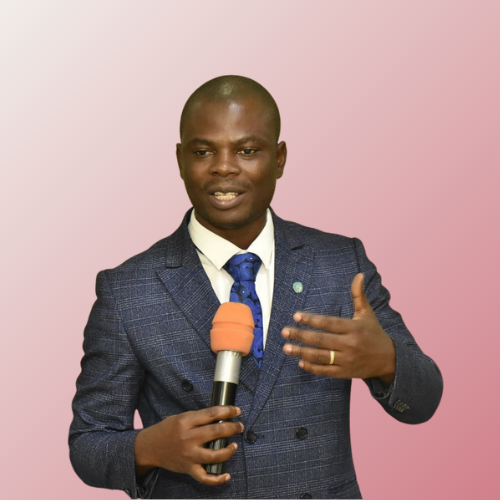
Rafiu Lawal
Rafiu Adeniran Lawal has more than seven years’ experience in conflict prevention, peacebuilding, and civil society engagement. Currently, Rafiu is the founder and executive director of the Building Blocks for Peace Foundation, a network of young people who work for peace and security across communities in Nigeria and lead the implementation of the 2021 National Action Plan on Youth, Peace, and Security. He is currently the regional representative of Global Partnership for the Prevention of Armed Conflict in West Africa. He has previously volunteered as regional coordinator of the United Network of Young Peacebuilders in West and Central Africa. Rafiu holds a master’s degree in Peace and Conflict Studies from the University of Ibadan and a bachelor’s degree in Social Studies Education from Obafemi Awolowo University. He is a passionate peace advocate, teacher, social commentator, and researcher. He co-authored the book ‘Connecting and Amplifying Voices of Youth Building Peace in Nigeria (2020)’ and the report ‘Complementarity of the UN Security Council Resolution 2250 and the AU Continental Framework on Youth, Peace, and Security (2021)’. Rafiu is a 2022 Mandela Washington Fellow-a leadership initiative of the US Department of State.

Elisenda Ballesté Buxó
Elisenda Ballesté Buxó is the Coordinator of the Global Democracy Coalition, a strategic multi-stakeholder alliance of organizations to advance and protect democracy. The Coalition helps to amplify the voices of individual organizations, allows for dialogue across regions, themes and sectors, and enables individual organizations to have greater impact as part of a collective effort to advance and protect democracy. International IDEA is one of the co-coordinators of this initiative.
Prior to this, Elisenda managed the EU co-funded Global Monitor of COVID-19´s impact on Democracy and Human Rights project, an online monitoring tool of Covid-19 measures adopted by the 165 countries covered in the Global State of Democracy Indices. She was also responsible for the Middle East subregion in the Global State of Democracy Report and In Focus, producing analysis and assessment on democratic trends and issues. Before joining International IDEA, Elisenda was an academic in various universities in Mexico. She has cooperated closely with NGOs and presented lectures at several international conferences.