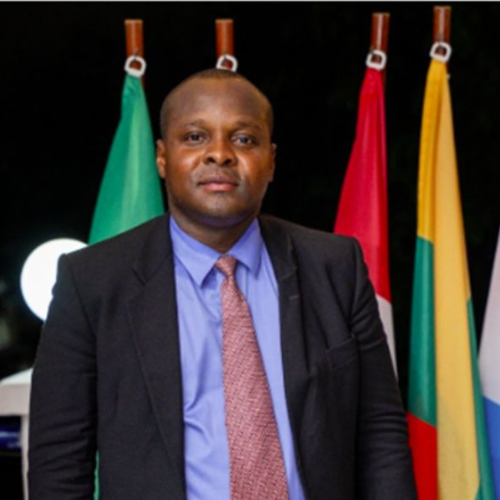
Taweh Johnson, Executive Director of Campaigners Against Misinformation and Disinformaiton Liberia
Earlier this year, we had the opportunity to sit down with Taweh Johnson, Executive Director of Campaigners Against Misinformation and Disinformation Liberia, a leading organization working at the intersection of media literacy, youth empowerment, and digital democracy. A member of the UNESCO Media and Information Literacy Alliance, this organization focuses on building public resilience, countering false narratives, and ensuring access to accurate information, particularly in contexts where trust in media and institutions is fragile.
In this interview, Taweh Johnson reflects on his path into media literacy and describes how misinformation, particularly during the COVID-19 pandemic, shaped his work with Campaigners Against Misinformation and Disinformation Liberia. He highlights the importance of teaching students to verify sources, the challenges facing African youth in digital spaces, and the dual role social media and AI can play in spreading or countering false narratives. He also underscores the value of international collaboration, including frameworks from the UNESCO Media and Information Literacy Alliance, in strengthening public resilience. Taweh closes with a practical reminder that verifying information, questioning sources, and being intentional about what is shared is essential to protecting democracy in the digital age.
What first motivated you to launch the Campaigners Against Misinformation and Disinformation in Liberia? And how did you become involved in the fight against misinformation in your country?
I got involved with media literacy after I completed YALIChecks online course. YALIChecks is an online course of the Young African Leaders Initiative, and it focuses on promoting media literacy. After I completed that online course, I decided to take action. I reached out to a few university students, shared the idea with them, and that’s how we began.
We started with a media literacy campaign targeting eight schools in rural Montserrado County. We impacted over 600 students through our media literacy awareness, and I’m happy to announce to you that these students are now holding their peers and their parents accountable for the information they bring and verifying if the source is credible and reliable.
The situation in your country is not an easy one, and you’ve seen firsthand how misinformation and disinformation can destabilize communities and distort democratic participation. Can you share a moment when this impact felt specially real or really personal to you?
Yes. During the COVID-19 pandemic, there was an upsurge of false information. Many people died because of false information. Many people acted on false information, and that led to their death. The World Health Organization (WHO) reported infodemic was a major contributor to the spread of COVID-19. Now, many of you might be wondering what infodemic is. Infodemic is the spread of false information during a pandemic. This was a moment for me when it became real. The impact, the adverse effect of false information, became real to me during COVID-19.
In your view, what roles does media literacy play in building a healthy democracy?
The first role is it makes citizens become informed regarding democratic governance and development issues. Media literacy also enables citizens to verify information and makes citizens have critical skills in analyzing information.
Could you share a personal example, without mentioning names, of a student you’ve seen develop critical thinking skills through media literacy to help counter disinformation?
Yes. Let me give you an example. During the media literacy campaign, we told the students that regardless of who brings the information, if it’s your father, your mother, your brother, or your sister, do not just believe what they say. Ask them, “Where did they get the information from?” That’s the source.
And then you now can be able to assess if the source is a credible and reliable source. Most parents really don’t want to be accountable to their children. So one of the students reached out to us and told us that after the media literacy campaign, his mother came back with some information, and he questioned his mother, and she asked him, “Where are you learning about the source for information?” And then he asked his mother, “Mom, where did you get the information from?” And she shouted, Why are you asking me? Why do you want to know the source?
Most times they don’t want to be accountable, and that’s a major issue, not just in Liberia. We told them that parents have to be accountable for the information they bring, and they have to disclose the source so that people know, and people cannot just run with information that does not have a source. But then there was a pushback in that instance. So what that tells me is that the students are now asking their parents for the source of the information they bring. And that shows that we are making an impact.
We’ve been talking about media literacy, misinformation, and disinformation. But we also have to acknowledge that Liberia, like many other countries, faces challenges not only with misinformation, but with access to information itself. How do you navigate this double bind, where people need greater access to digital platforms, while also needing the tools to critically assess what they encounter online?
This is very important to Campaigners against Misinformation and Disinformation in Liberia. Our main focus is to provide the knowledge and skills to citizens on how to verify information because now many people can get information from social media. Many people don’t use the conventional news to really get information. Most people don’t read newspapers. When you ask a youth or an elderly person where you got the information from, they tell you from social media. Now the main concern is many people are now using digital platforms to consume information. Are they media literate?
The Africa Center for Strategic Studies reported in 2024 that the number of active social media users has risen from 100 million to over 400 million since 2016. What does that say to you? This is alarming. This says that the need for us to have more awareness and more training on media literacy is important at this moment. So this is what we are doing. We are targeting users of social media and then teaching them digital skills, teaching them tools they can use to verify information, and empowering them with media literacy skills. People are getting connected every day; people are signing up and having social media accounts. It keeps increasing.
I understand that there’s still a gap when they leave the urban areas and go to the rural areas. What happens in the rural areas? People in the rural areas rely on those who have phones and those who can access the internet to get information. So regardless of what those people who have access to the internet say, the rural residents believe it because they believe those people have access to the internet.
That’s the major challenge we have. So this is where we have to come in. We do citizen engagement. We go to the people. We target different groups in society. Our most recent initiative targeted marketeers. These are people whom criminals target to scam. Accessibility is still needed, but empowerment on how to verify information matters most to us.
When it comes to the digital experiences of young people in Liberia and across Africa, what do you think the Global North often misunderstands or overlooks?
The inclusion of young people matters. Hearing how they consume information matters. I really don’t think these conversations take place. Decision makers who come from the global north don’t have a clear understanding of the African context. People from Africa need to sit at those decision-making tables to give their own perspectives on the African context. So that is missing. It has to be included.
We have been talking about how you work closely with young people. Could you tell us a little bit, what are they teaching you about digital engagement, about activism, and what do you think they will bring to the future of online organizing?
Many years ago it was difficult to mobilize people. It was difficult to gather people. It was difficult to make people listen to what you have to say. In this digital age, it’s easy. Now anybody who has a smartphone with social media account can easily mobilize people. And what they are teaching me is boldness and fearlessness. Now you see many young people are using their talents and their skills to promote themselves, to promote causes, to mobilize people, to organize protests, and to hold their government accountable, which is very good in a democracy. It promotes a healthy democracy. Now there is no excuse. Social media makes it easier to meet millions of people online and create the change that you so desired.
Social media algorithms often reward outrage, division, or viral falsehoods. Have you seen any successful strategies, particularly by large platforms or organizations, for working within these systems to promote credible information or civic engagement? And have you seen any real change?
Well, yes. At the moment, the algorithm of social media promotes falsehoods. But here is what I want to say. When citizens become media literate, I want to believe that trend will change. When the right information is provided, and when people share truthful information more, of course, the algorithm has no other way to go but to promote what is truthful. So this is how I see it. This is where our work comes in to make sure we empower citizens to become media literate and to make sure that citizens do not fall for false information. Do not fall for clickbait. Do not fall for information that can cause chaos; do not fall for information that can disrupt and threaten democracy. Make sure that whatever they see, they have the ability to verify that information.
How do you balance pushing back against this information while avoiding censorship or overregulation? What’s the line between protection and control, in your view, especially in fragile democracies?
Empowerment is the line. In as much as you want to protect and you don’t want to overregulate, you need to empower citizens so that they know whether what they are consuming is truthful or not. If they don’t have the right information, if they’re not empowered with the relevant skills and knowledge on countering false information, it becomes a very serious problem. They don’t know where to go. They don’t know where to look to get the right information. So empower them. Tell them what to do when they come across information. You have to communicate. Communication is a form of empowerment. Show them the channels.
Campaigners Against Misinformation and Disinformation Liberia is part of the UNESCO Media and Informational Literacy Alliance. How important is international collaboration in this space and how has that specific alliance supported your work locally?
We just joined the UNESCO Media and Information Literacy Alliance in January of this year (2025). International cooperation is very significant in promoting media and information literacy across the continent. And I just want to refer to the Africa Center for Strategic Studies report that came out with the regional map of disinformation in Africa, and just West Africa alone in 2024 has 72 disinformation campaigns, and it tells you that this is a very serious problem. It tells you that we need to come together as members of the Alliance to have a framework that we all can go by in combating disinformation and in empowering citizens with media and information literacy skills.
The framework will enable us to hold government accountable and to hold civil society organizations accountable. And then we can also derive ways to include media literacy in other areas such as health and education. Media literacy is in all fields and all sectors. We need to include it in the curriculum. Students can now learn media information literacy in schools so that before they even leave high school, they are better equipped with the skills and knowledge to counter false information and consume information responsibly. Not just listening to and running with any information, but becoming responsible citizens when it comes to information verification and consumption.
Bad actors every day are deriving new ways to spread false information. So we have to be on top of our game in knowing the tactics they use so that we can confront those tactics, and we can explain and share those tactics with the citizens so that they are aware, so that when they see, for instance, mass-sharing, you know, most often people confuse mass-sharing with verification. When information is spread on multiple social media platforms, people tend to believe that information, but that is not true. It doesn’t mean that because you have seen information on multiple other social media platforms that means it’s credible. No, you have to verify. Another tactic bad actors use is impersonation. They use profiles of celebrities and influential people in society to deceive people.
Given that bad actors increasingly use impersonation, often posing as celebrities or public figures, how do you see artificial intelligence shaping this challenge?
Artificial intelligence is another major issue. Let me just say, in the age of false information, we have to be very careful about trusting what we see, because now artificial intelligence is making false information appear real. Generative AI is undermining the fight against false information all across the world. This is where skills, empowerment, training, and awareness are needed now. We have to do it.
Now, when people see AI content, they tend to believe it. What can they do to detect if this content is AI content or not? We have to focus on that. AI is not going away anytime soon. They keep modifying approaches in spreading false information. So we too have to be able to counter what they do and provide ways in which the citizenry can counter false information that AI generates.
If you had the opportunity to speak directly with a major tech platform, such as Meta, TikTok, or an AI company like OpenAI, what would you ask them to change in how they operate in Liberia, or in countries with similar contexts?
I would say to Meta, during elections in countries where people use the service of Meta, what I would recommend to Meta is that during the electoral period, in order to help fact-checkers and to promote media literacy, there’s a need to put fact-check tags on sensational stories and information that does not have references and information that incites violence.
This will protect the democratic process and safeguard democracy because most often during elections, most citizens have a side, and regardless of what they say, it doesn’t really matter if it’s credible or not. All they want to do is to win supporters over. So they care less about what they say. It doesn’t matter to them. All they want to do is to see how they can get more supporters. So they put out false information.
It has to go beyond elections. I understand Meta has just closed their fact-checking program, but it has to be reactivated because it has been contributing to protecting information integrity across continents. It has been helpful in preserving democracy. That is very important, and that has to be reactivated. You cannot take that away. And when it comes to having elections across the world, in Africa and beyond, that is a very critical period that you need to be engaged with, especially content that comes from countries.
People who use their platforms have different motives. So you have to be able to put fact-check tags on those posts that don’t have any references, that incite violence, and that might lead to chaos and all of that. Another thing I would say is digital accessibility for people with disabilities is very important because for us at Campaigners Against Misinformation and Disinformation, we support people with disabilities. Meta has to support initiatives in Africa too regarding media literacy and regarding digital accessibility. This goes to those who are making decisions at Meta and other social media platforms. It has to be taken into consideration because social media platforms generate resources from advertisements.
And guess what? Most of these advertisements that these social media companies promote are most often false information, but they generate resources, and then people get the false information. So the advertisements have to be scrutinized to know if it is accurate information.
For someone who feels overwhelmed by the chaos of the digital space, what small and concrete action would you recommend them to protect democracy online, starting today?
Starting today? Do not share just any information you come across online. That is what I want to leave with you. Do not share just any information you see. You have to verify information because when you do that, you protect democracy. When you do that, you protect the integrity of the information landscape. Social media has a viral nature. Whatever you post online, others can see that post in seconds. This is a major challenge we have in our work. When false information is spread, it reaches a lot of people, but when the right information is provided, it doesn’t reach all of those who got the false information.
It’s advisable for you to take responsibility. Do not share any information without verifying. Nobody will give you any prize to share information. You know, most people love to share a moment of fame—oh, yes, I was the one who shared this information. You cannot allow that moment of fame to cause you to share false information. The consequences are far-reaching. They are unimaginable. You would not believe what your information you just shared might do in seconds. It causes panic, it causes chaos, and it causes instability.
Ask critical questions. Who is the source of this information? Is the source credible? Where else can I check? If someone is not giving you any reference for some information, verify it. Do not amplify it.