

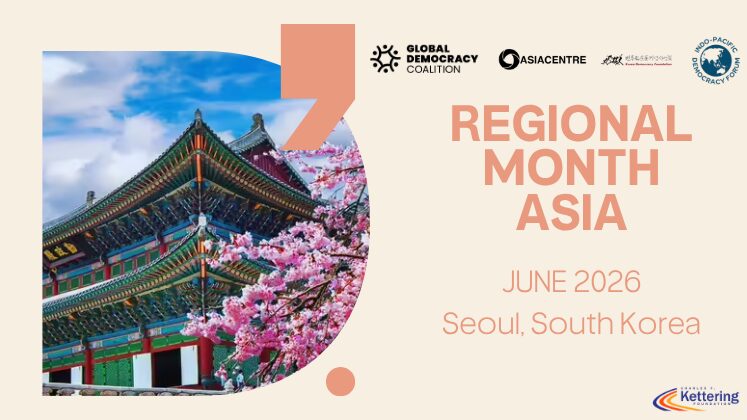
In June 2026, we celebrated Asia with a pre-forum webinar, a hybrid forum, a post-forum interview and sbsequent article, a podcast episode, and a month-long social media campaign. The pre-forum webinar, “Democratic Openings Without Democratic Consolidation: Rethinking Democratic Renewal in Asia” took place on 4 June and explored why democratic openings so often fail to translate into lasting democratic practice, what has fundamentally changed in the democratic landscape of the 2020s, and whether democratic actors may need to rethink some of the assumptions, strategies, and frameworks that have traditionally shaped democracy support efforts.
The hybrid GDC Asia Regional Forum took place on 10 & 11 June in Seoul, South Korea, co-hosted by Asia Centre, Korea Democracy Foundation, and Indo-Pacific Democracy Forum. This forum addressed democratic governance challenges in Asia, focusing on civic space, regional cooperation, and inclusive policy dialogue. The Post-Forum Interview, “Beyond Seoul: Emerging Lessons and Open Questions for Democratic Cooperation in Asia” took place on 18 June and explored how democratic actors can move beyond fragmented responses, what forms of regional solidarity are most effective, and how networks and alliances can better support democratic resilience and renewal in increasingly complex political environments. The interview was transcribed and developed into a short article, “Cooperation Does Not Happen Automatically: Reflections from Asia’s Democracy Practitioners.” Finally, we released the Asia Regional Month Thank You Democracy podcast episode featuring Annie Zaman, co-founder of Exile Hub, to explore the evolving landscape of democracy across Asia at a moment of growing pressure, transformation, and resilience.
Forum Webinars:
Alongside the GDC Asia Forum 2026, the GDC Secretariat hosted 2 webinars designed to introduce and/or discuss the main topics of the forum; one prior to the forum and one after the forum. During the month of June, the GDC organized the following 2 panels:
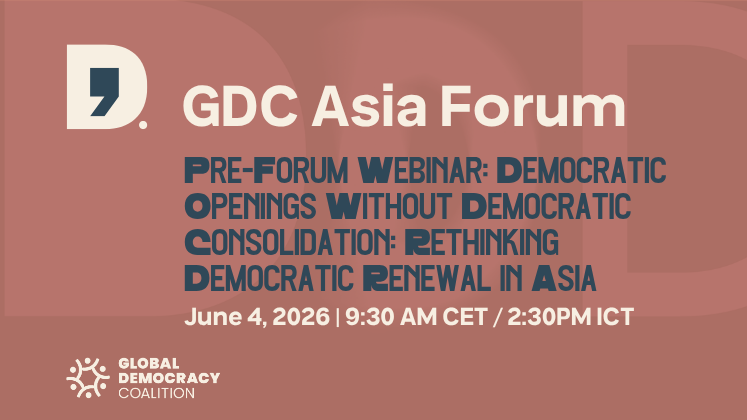
GDC Asia Pre-Forum Webinar: Democratic Openings Without Democratic Consolidation: Rethinking Democratic Renewal in Asia
Rather than focusing on individual country cases or short-term political developments, this webinar created space to reflect on broader structural and regional questions emerging across Asia. It explored why democratic openings so often fail to translate into lasting democratic practice, what has fundamentally changed in the democratic landscape of the 2020s, and whether democratic actors may need to rethink some of the assumptions, strategies, and frameworks that have traditionally shaped democracy support efforts.
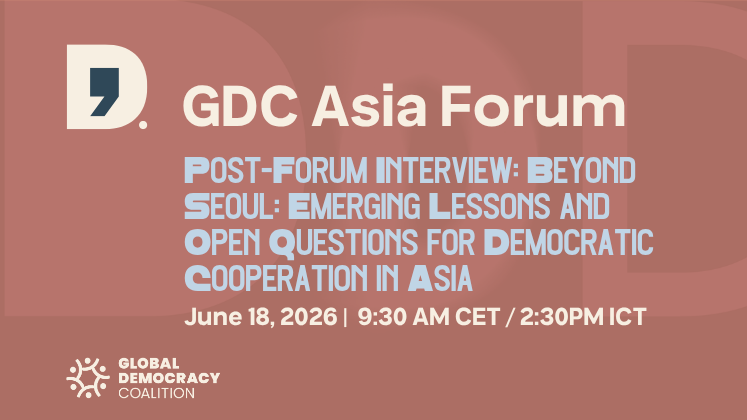
GDC Asia Post-Forum Interview: Beyond Seoul: Emerging Lessons and Open Questions for Democratic Cooperation in Asia
Rather than revisiting the Forum panels, this interview created space for strategic reflection on the broader lessons, tensions, and unanswered questions emerging from Seoul. It continued the conversation beyond the Forum itself and helped identify possible directions for future democratic cooperation and engagement in Asia.
Watch the full recording here.
Read the article about the interview here.
Europe Regional Forum:
Theme: Navigating Democratic Transitions: Emerging Gaps & Opportunities
Date: June 10 & 11, 2026
Location: Seoul, South Korea
Co-Hosts: Asia Centre, the Korea Democracy Foundation, and the Indo-Pacific Democracy Forum
*The GDC Regional Forums 2026 are sponsored by the Charles F. Kettering Foundation.
Background and Regional Context
The 2020s witnessed a renewed wave of popular mobilisation demanding democratic reform across the Asia-Pacific. Mass movements challenged authoritarian governance, exposed corruption and elite capture, and, in some cases, succeeded in toppling regimes. In other cases, they have been swiftly contained or suppressed. Yet a striking and recurring pattern cuts across both outcomes: the “democratisation wave” and the short-term weakening or collapse of authoritarian rule have rarely translated into durable democratic practices. Instead, many countries find themselves caught in cycles of political uncertainty, institutional fragility and authoritarian resurgence.
The experiences of the 2020s suggest that these challenges are re-emerging under new conditions. Hong Kong’s Umbrella and later Anti-extradition movements (2019–2020) mobilised civic participation and articulated clear democratic demands, yet the rapid consolidation of legal and coercive controls from mainland China foreclosed any post-authoritarian openings. In Thailand, Gen Z–led protest waves from 2020 to 2021 challenged military dominance, but the entrenched judicial apparatus has thus far blocked structural democratic change.
On the other spectrum, Sri Lanka’s Aragalaya movement in 2022 succeeded in toppling the ruling regime amid economic collapse, yet existing constitutional and elite arrangements are resisting major changes to the political system. Bangladesh’s current transition following the protests in 2024 reflects a similar pattern, where the weakening of authoritarian control has created a political vacuum without yet producing a credible or inclusive democratic settlement. In Nepal, Gen Z-driven protests in 2025 against corruption and elite recycling have energised public debate but have so far contributed more to political fragmentation than democratic consolidation.
These experiences provide insights into democratic movements in the 2020s. For one, authoritarians have become more adaptive and resilient, often operating through legalism, electoral management and technocratic control rather than overt repression alone. Protest movements, by contrast, are faster, more decentralised and highly visible, but frequently lack organisational continuity, access to institutions or pathways to govern once authoritarian power is disrupted. These factors make democratic transition more volatile and more vulnerable to being squashed or for the outcomes gained to be lost once authoritarians get hold of their footing.
Yet far from being unproductive, the often disappointing outcomes of democratisation efforts nevertheless offer valuable lessons. New forms of information-sharing, solidarity and mass organisation drew previously disengaged citizens into political action, and, in some cases, briefly reshaped legal frameworks and post-authoritarian political arrangements. They have also demonstrated how domestic mobilisation can internationalise local struggles and compel external attention, even when institutional change remains limited. Analysing these practices highlights not only what fails to consolidate, but what is learned, transmitted and potentially redeployed in future moments of political opening.
Taken together, the 2020s represent a particularly important moment to reassess how democracy can be practised in post-authoritarian contexts. Focusing on how democratic practices emerge, circulate and are suppressed offers a clearer understanding of why post-authoritarian openings so often close – and where future possibilities for democratic renewal may lie.
Programme:
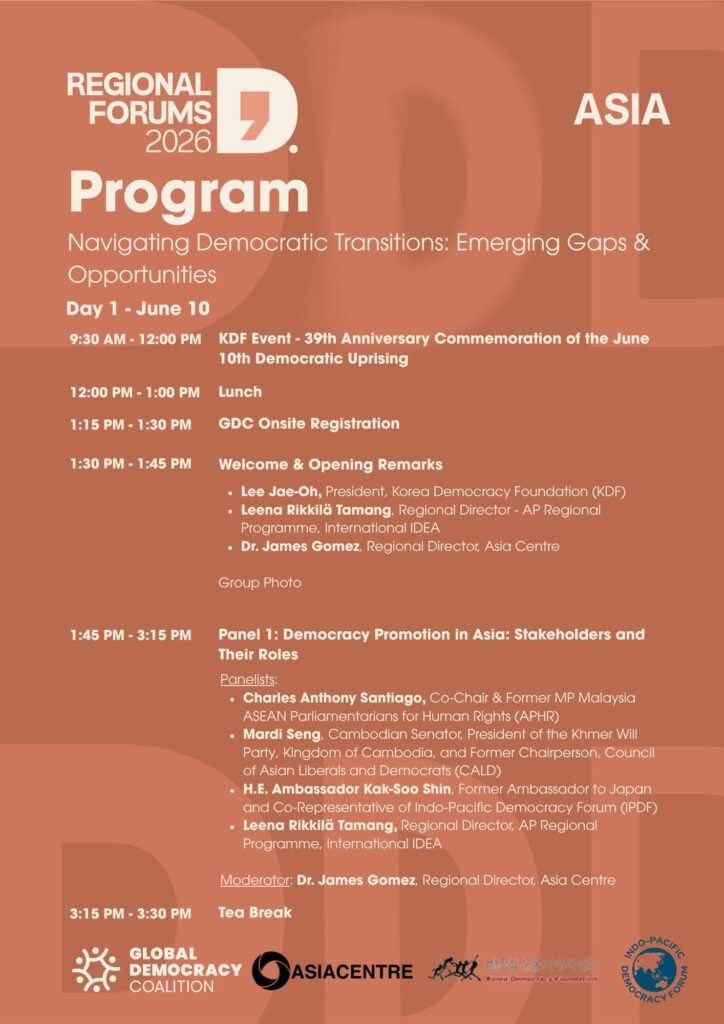
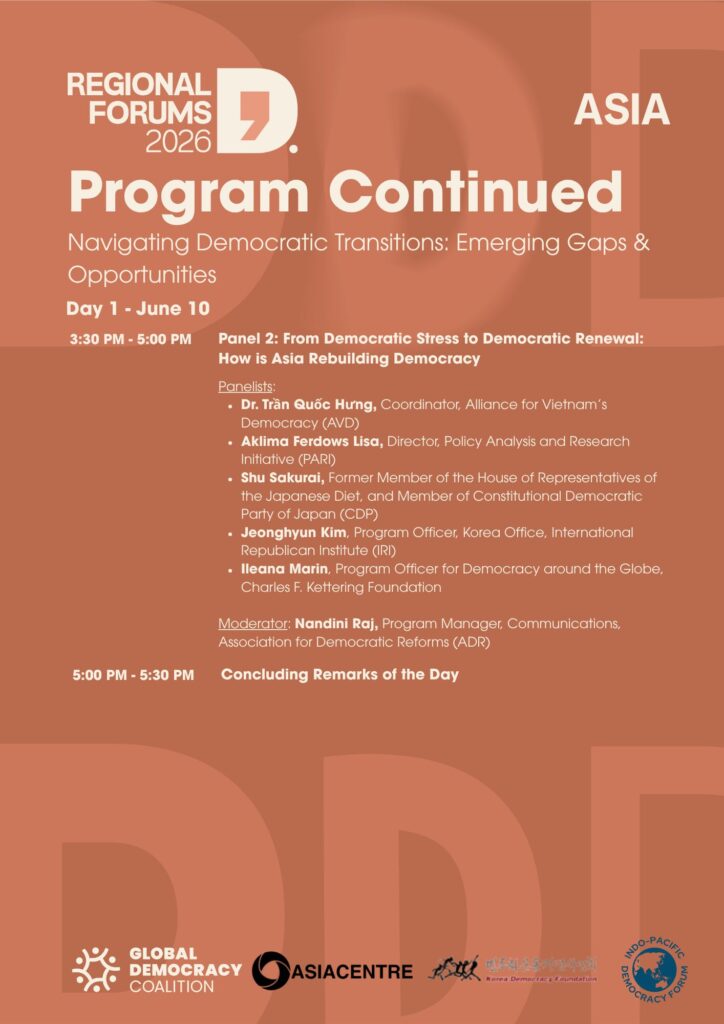
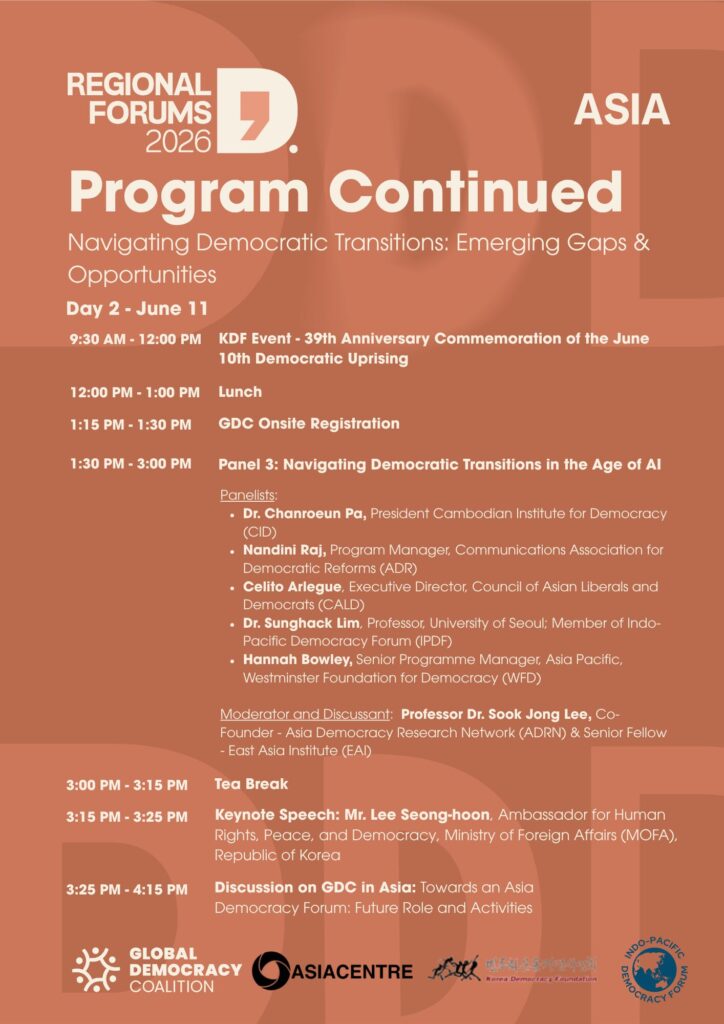
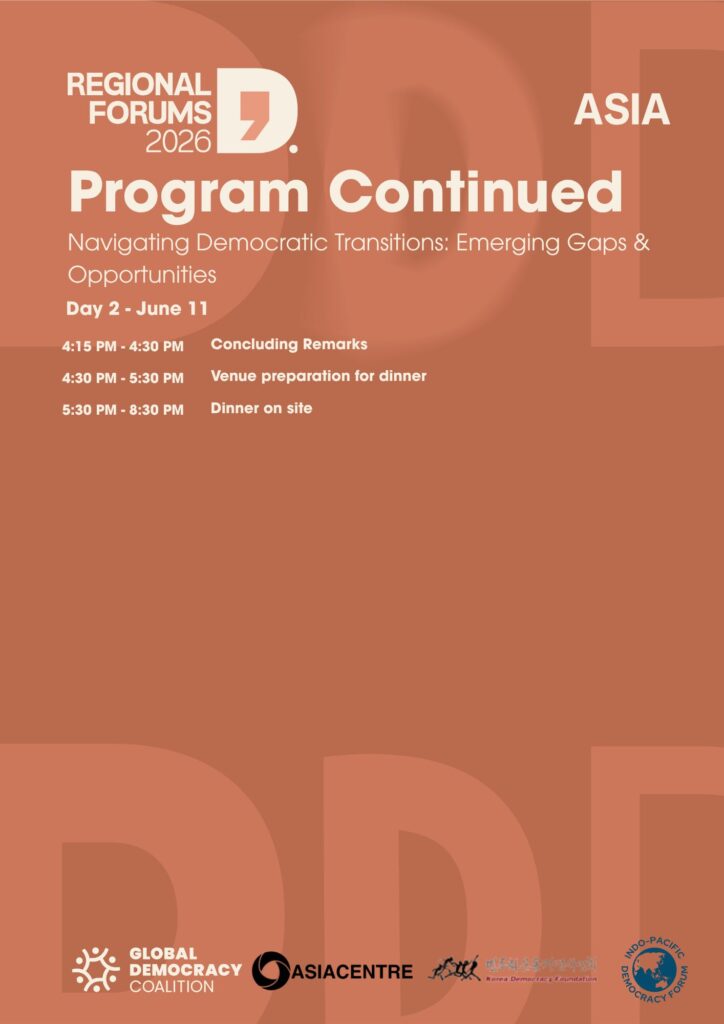
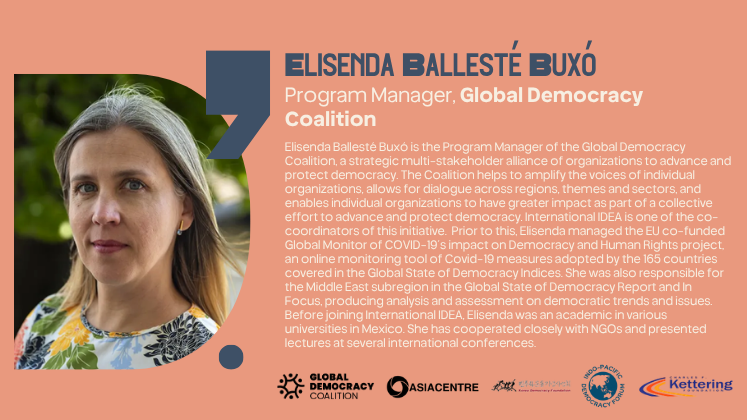
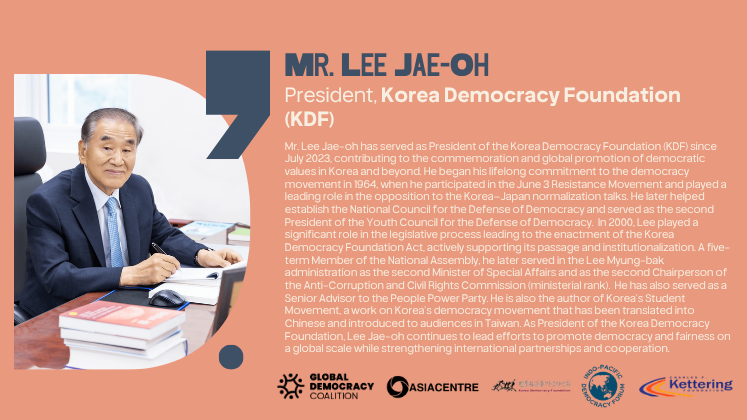
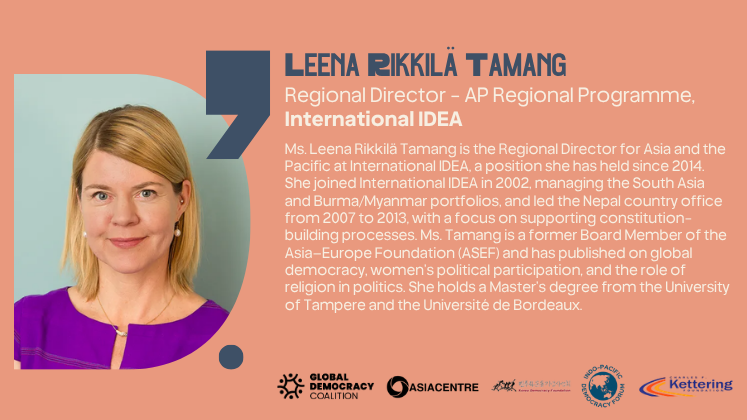
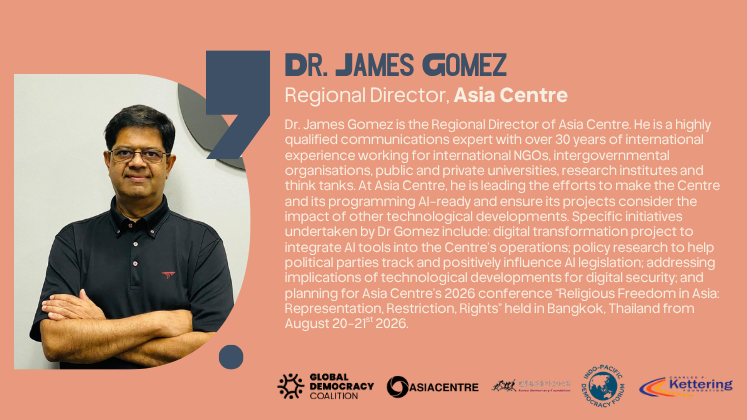
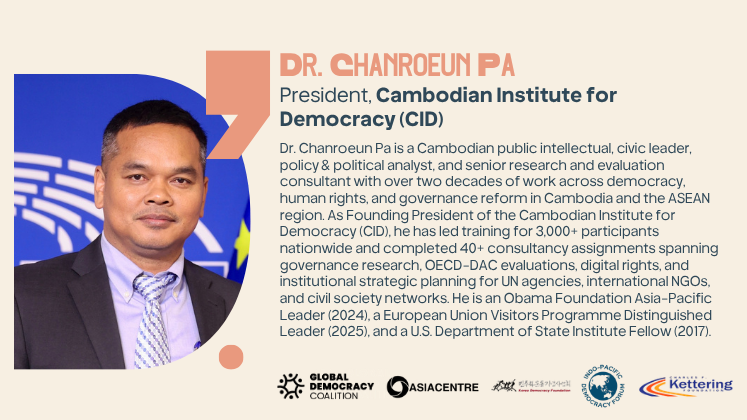
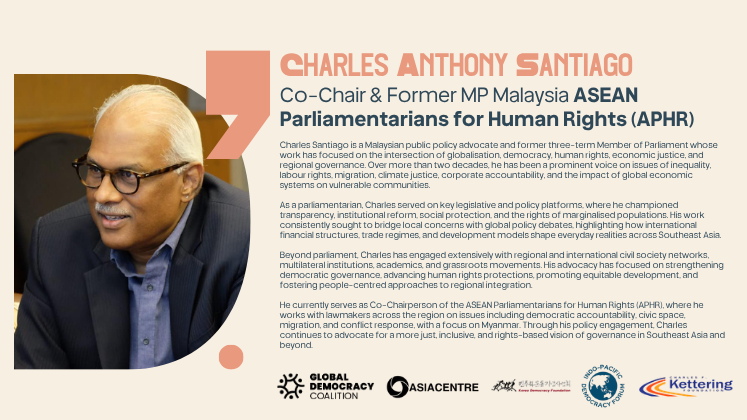
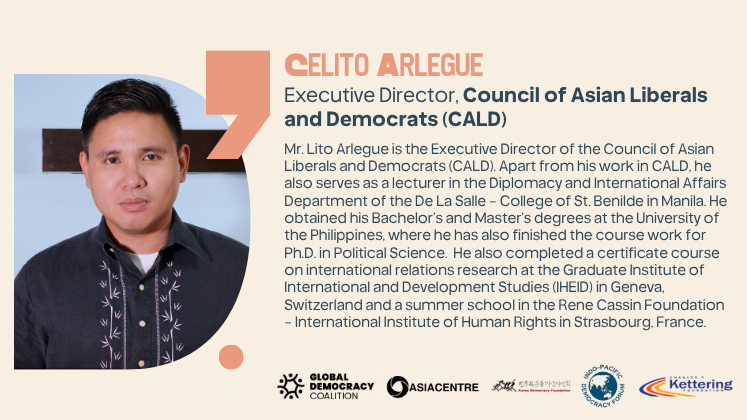
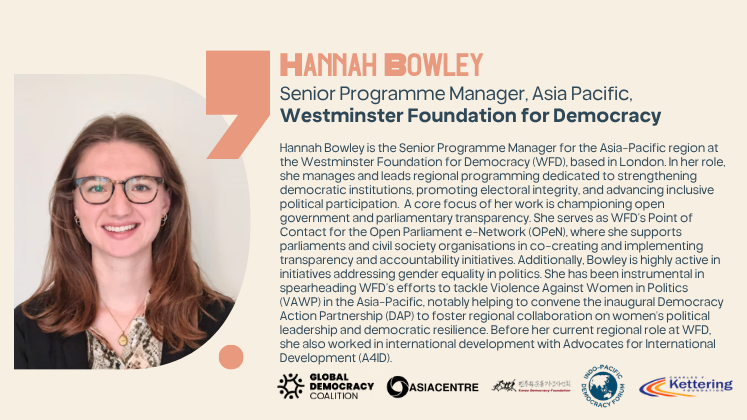
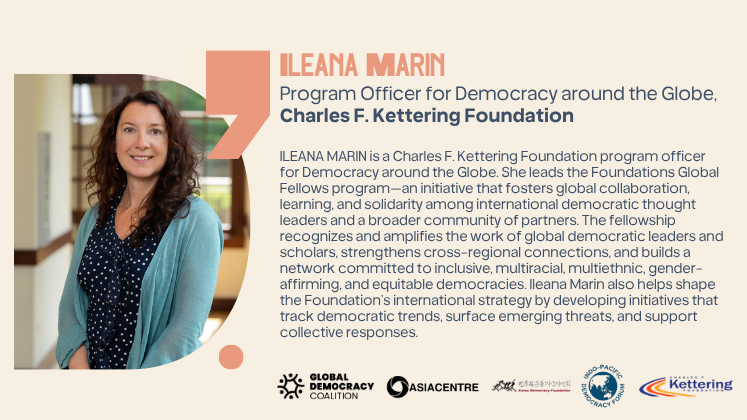
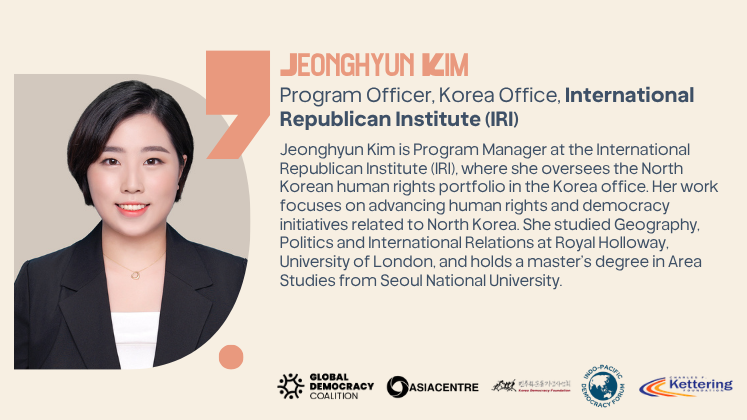
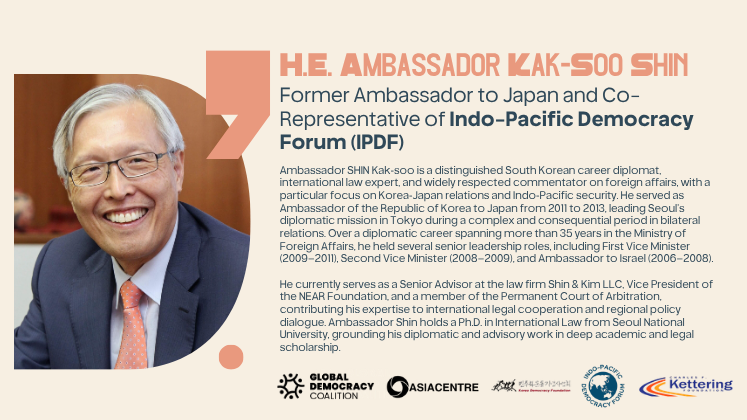
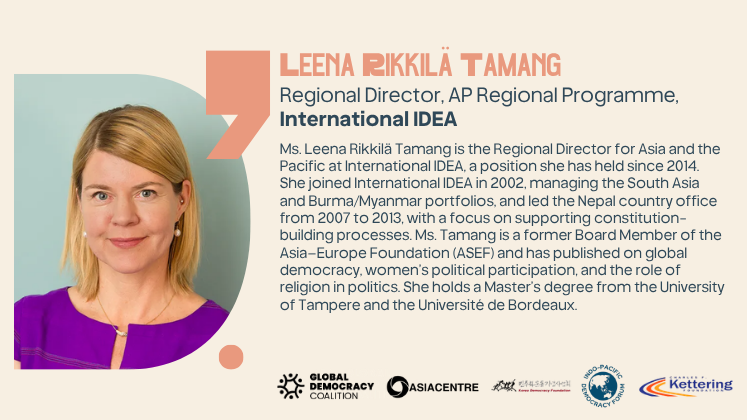
Panelist and Speaker Profiles
Forum Hosts and Opening Speakers
Moderators
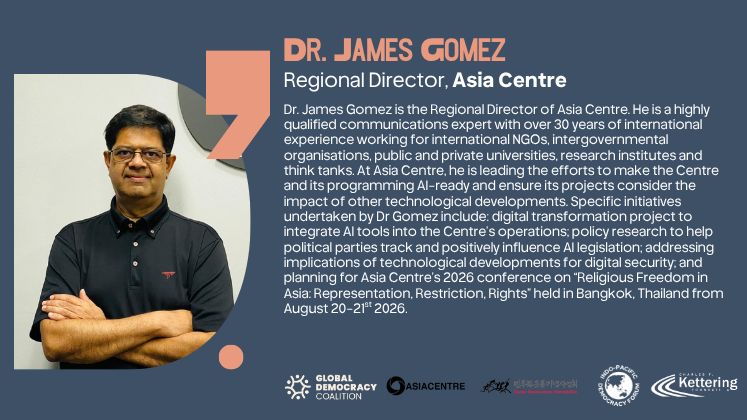
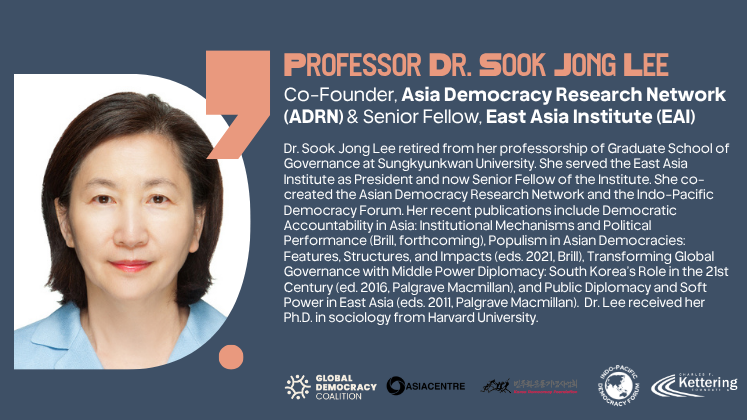
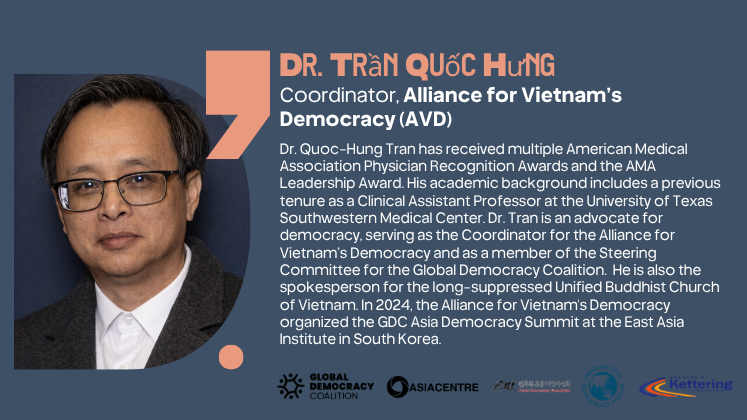
Panelists
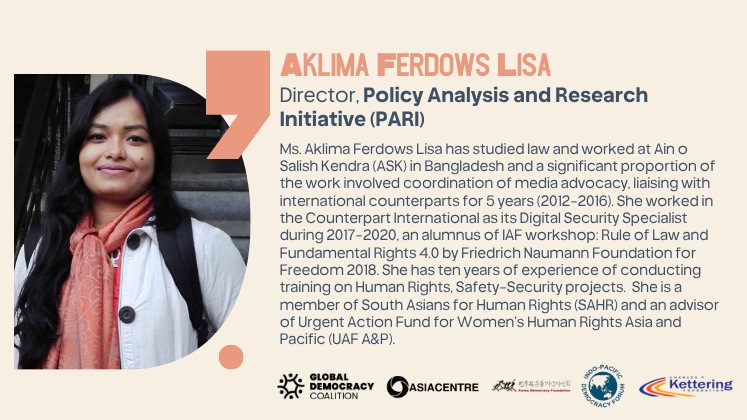
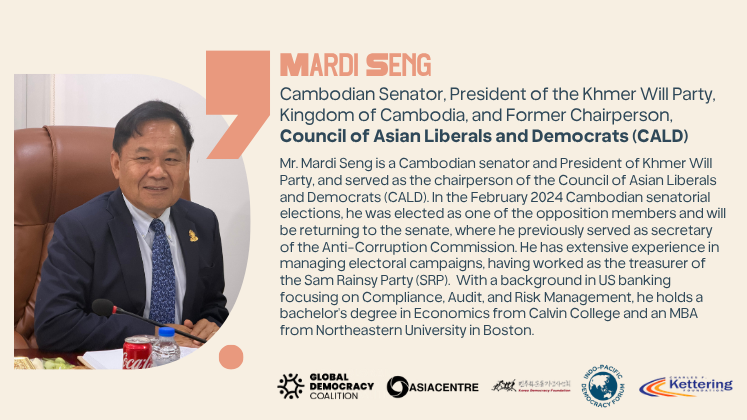
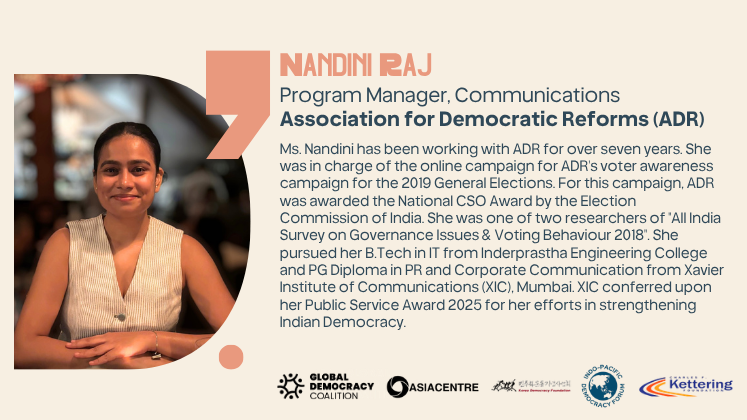
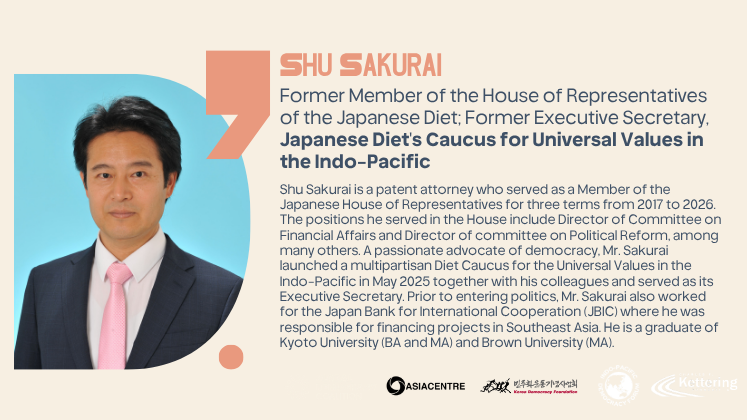
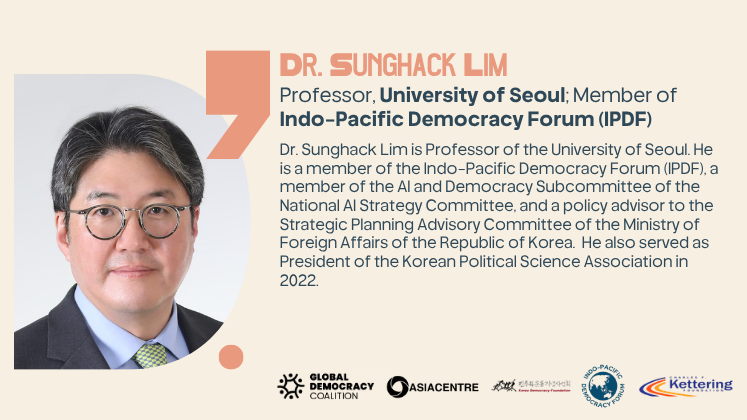
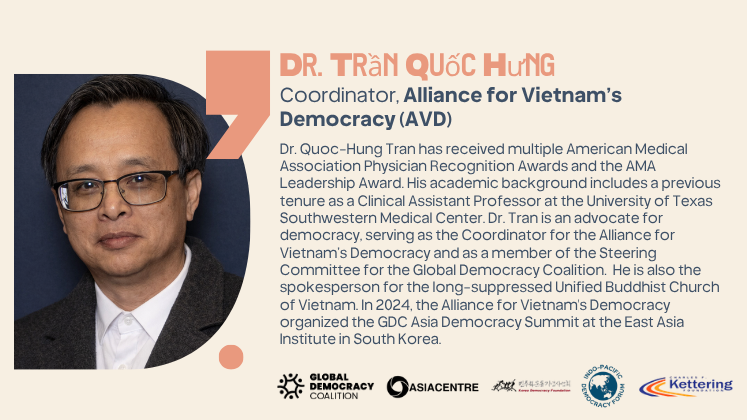
Watch the full Day 1 Forum recording here:
Watch the full Day 2 Forum recording here:
Asia Regional Month #ThankYouDemocracy Podcast Episode:
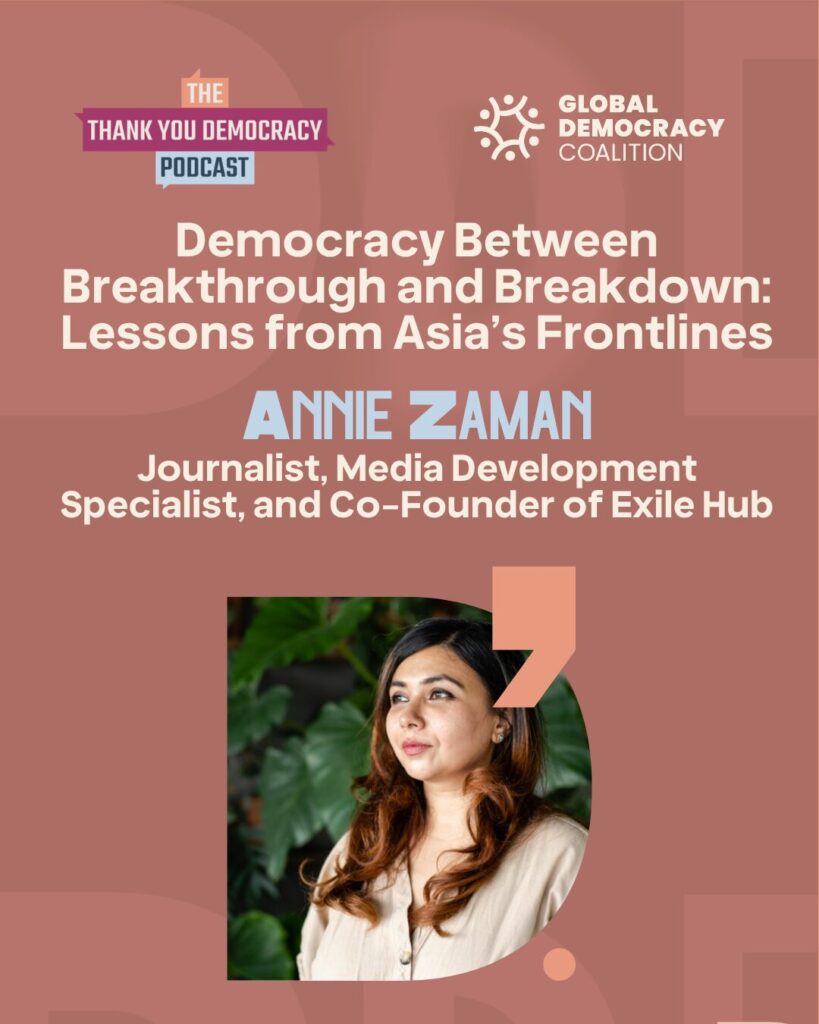
Democracy Between Breakthrough and Breakdown: Lessons from Asia’s Frontlines with Annike Zaman
In Episode 5 of the Thank You Democracy Podcast, we sat down with Annie Zaman, journalist, media development specialist, and co-founder of Exile Hub, to explore the evolving landscape of democracy across Asia at a moment of growing pressure, transformation, and resilience during our #GDCAsiaRegionalMonth.
Drawing on over two decades of experience supporting independent media and freedom of expression, Annie reflects on what it takes to move from moments of democratic opening to lasting democratic change. From Myanmar to Pakistan and beyond, she shares insights into why democratic breakthroughs so often struggle to consolidate, and what is needed to sustain them over time.
Throughout the conversation, she highlights how the nature of democratic challenges is shifting. Authoritarianism is no longer expressed only through overt repression, but increasingly through more complex and systemic pressures, from disinformation and surveillance to the erosion of civic space and public trust. At the same time, she emphasizes the critical role of journalism, civil society, and democratic institutions in maintaining accountability and preserving democratic gains.